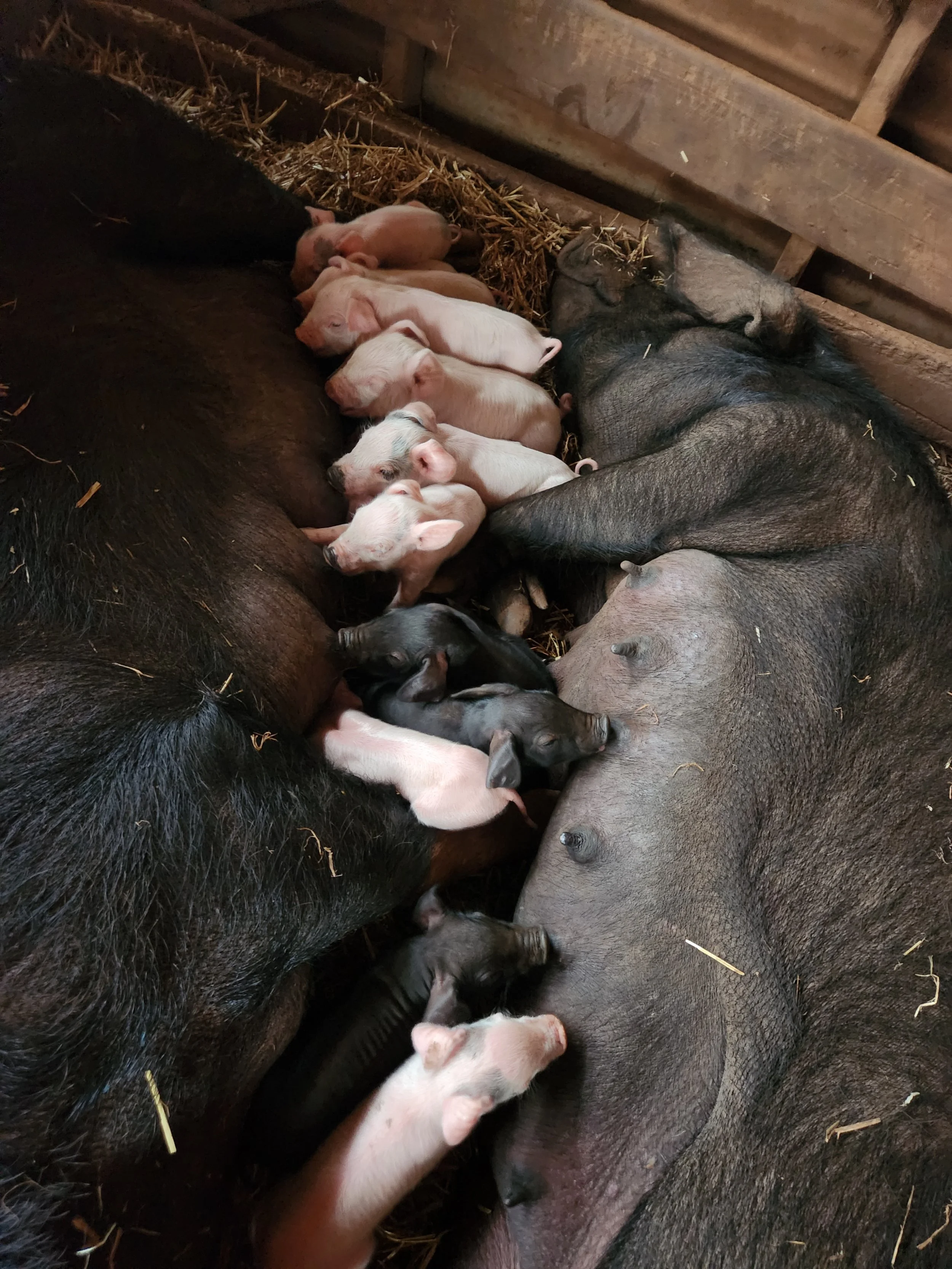
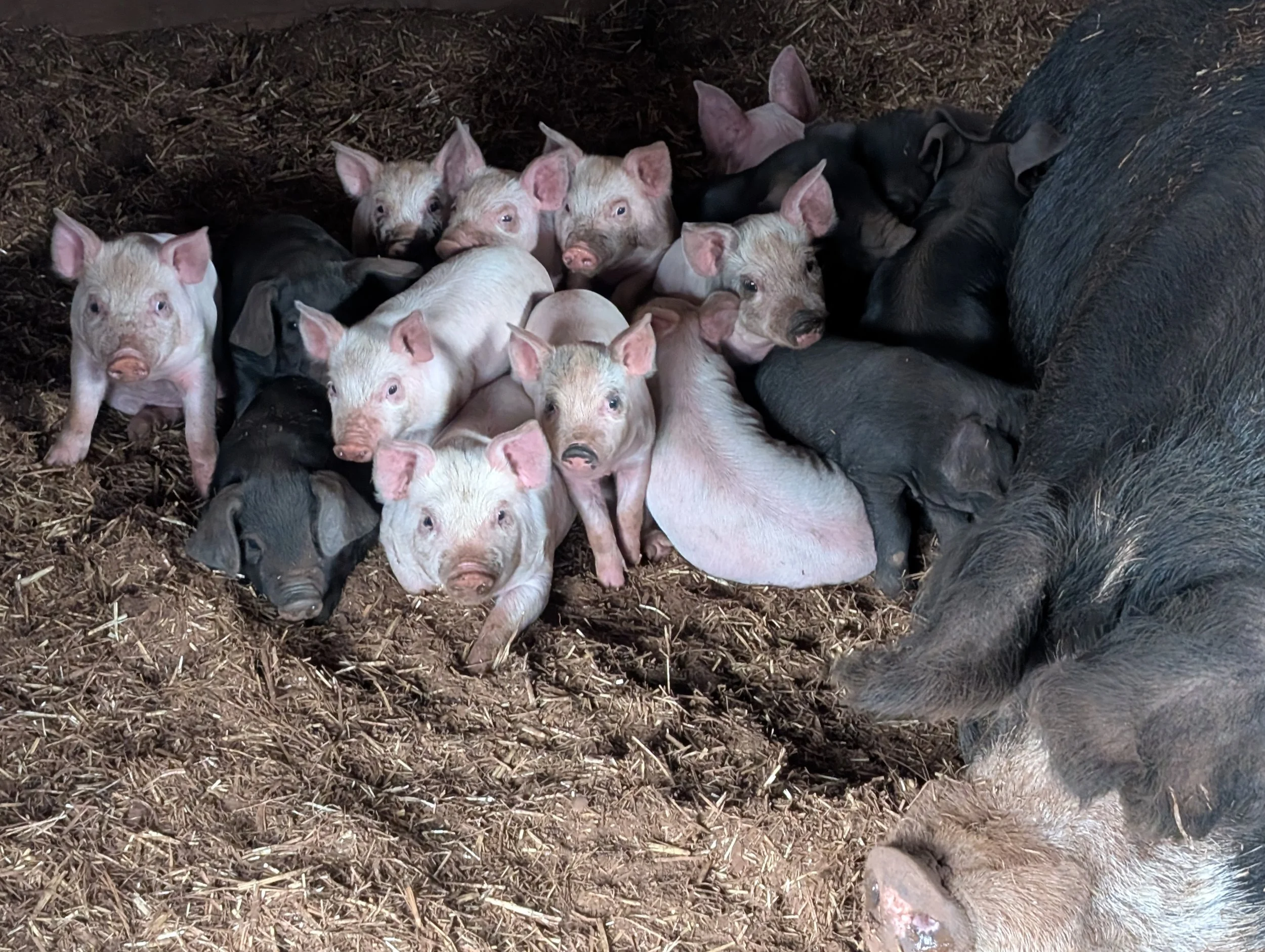
It’s a common phenomenon among livestock farmers that bad weather brings on the most animal births, and that has proved true for us this damp and frigid July at Pig and Earth farm. We currently have 72 new piglets! Born to 8 different sows this month and all doing really well. It’s a good time to have dozens of littermates to snuggle up with and keep warm.
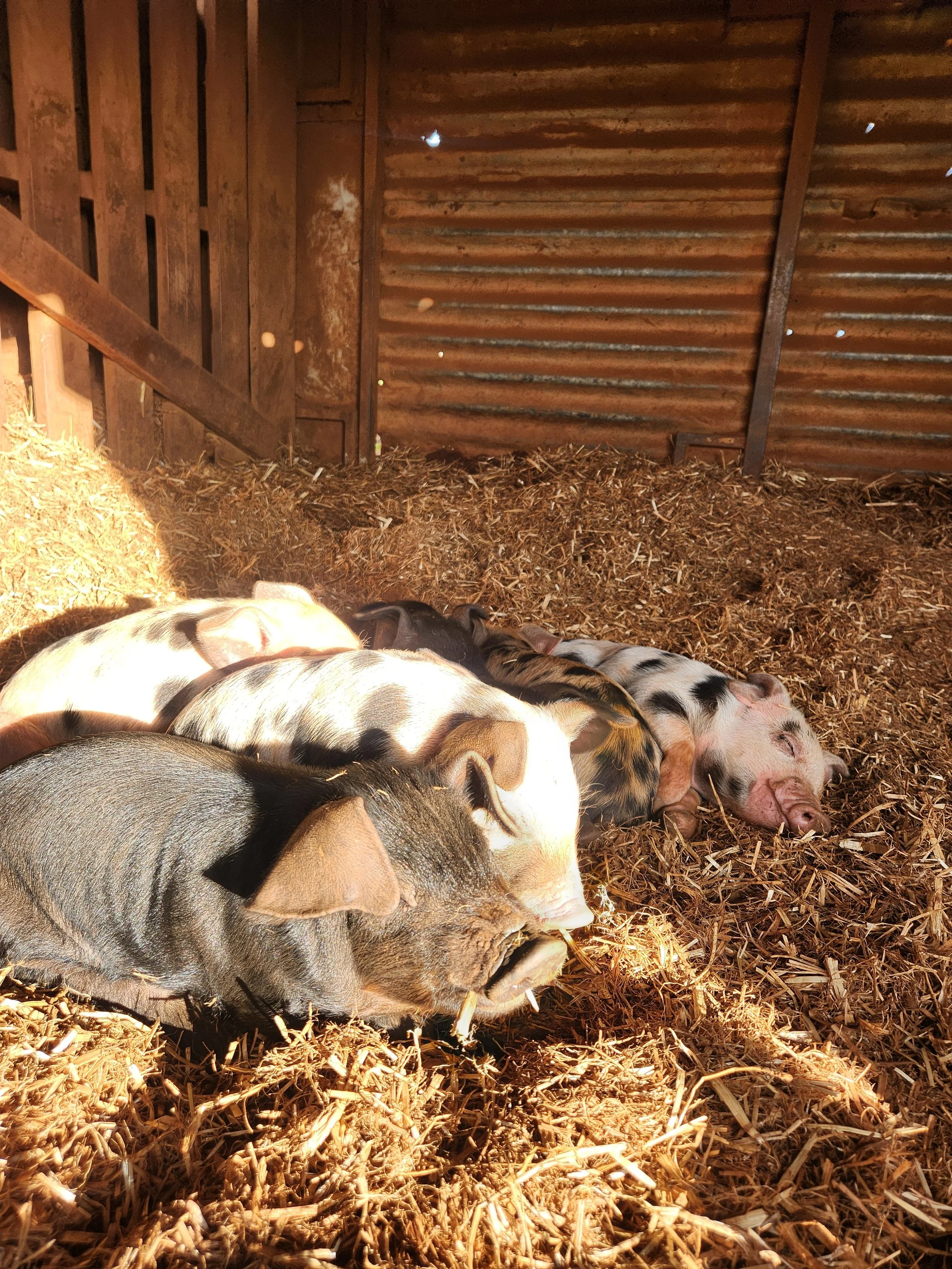
New piglets basking in a rare sunbeam
The abundance has been a welcome relief for us, as some fertility issues last year are currently presenting as a tighter supply of meat than we’d like. Managing the breeding of our pigs is a huge part of what we do, essential to get right so we can provide a consistent amount of meat throughout the year from animals that have had a chance to grow out slowly on pasture. Here’s a walk-through of how we do it:
We predominantly run a heritage breed of pigs called Large Blacks. We chose this breed because they’re excellent mothers and really well suited to grazing. Their pigment helps protect them from the sun, and they’re generally considered to be both hardy and docile. They do, however, have fewer piglets on average than their faster-producing commercial counterparts: 8 piglets per farrowing (birthing) is typical for a Large Black compared to 11 for the Large White, Australia’s most common commercial pig breed.
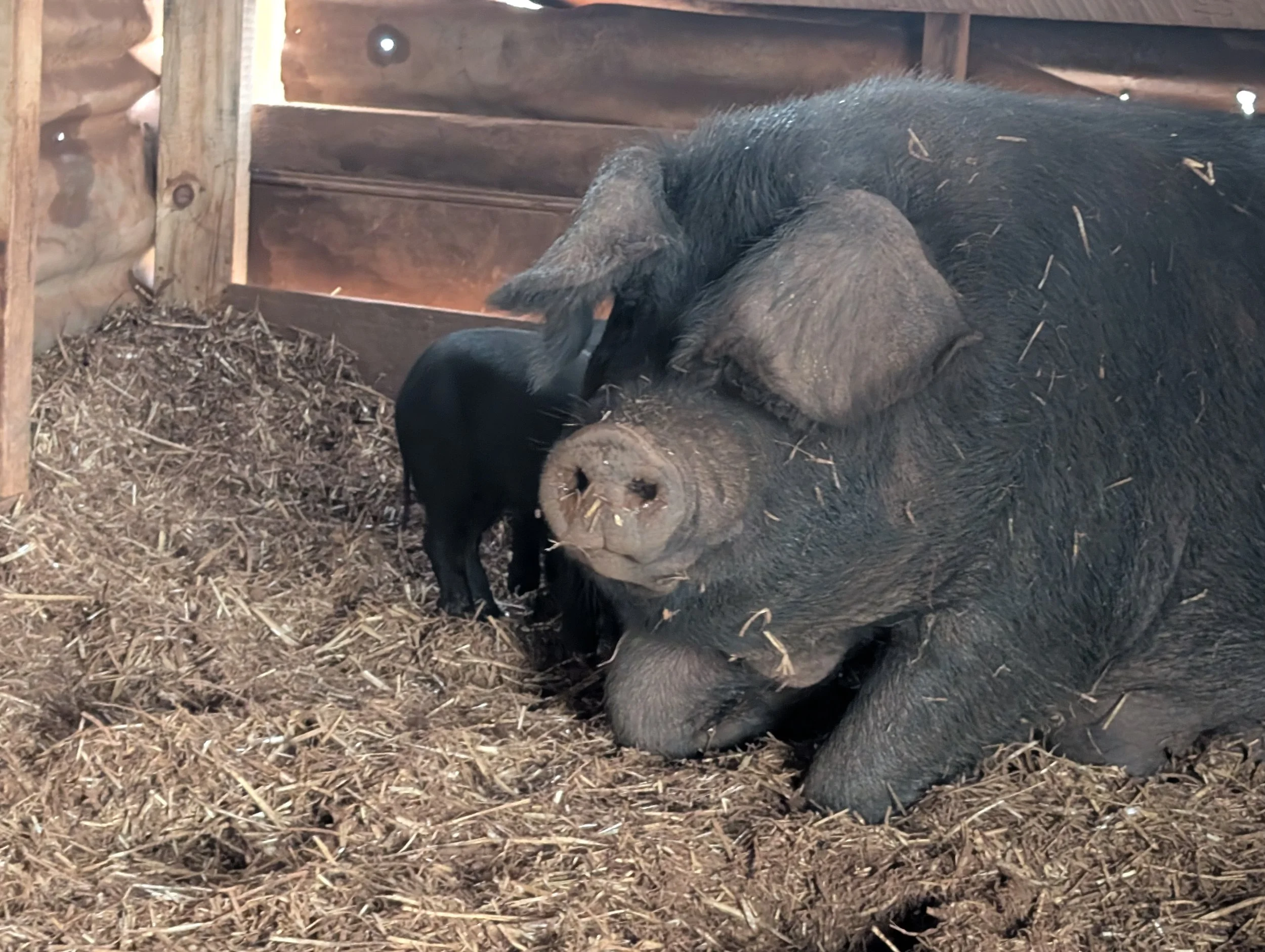
One of our Large Black sows
8 piglets is the perfect number for us though, because this is how many pigs we aim to process and sell each month. So we try to organise our breeding to produce one litter per month, and that litter generally gets to stay together as a family group throughout their whole life on the farm. This is really important and beneficial because pigs are social creatures who form strong bonds.
We raise them and grow them out for 9 months, which is significantly longer than the typical 5 month lifespan of pigs in a commercial facility. They stay with their mothers until they’re weaned at around 6 weeks, then spend their remaining months together. Once they reach around 60kg of carcass weight, they’re ready for slaughter.
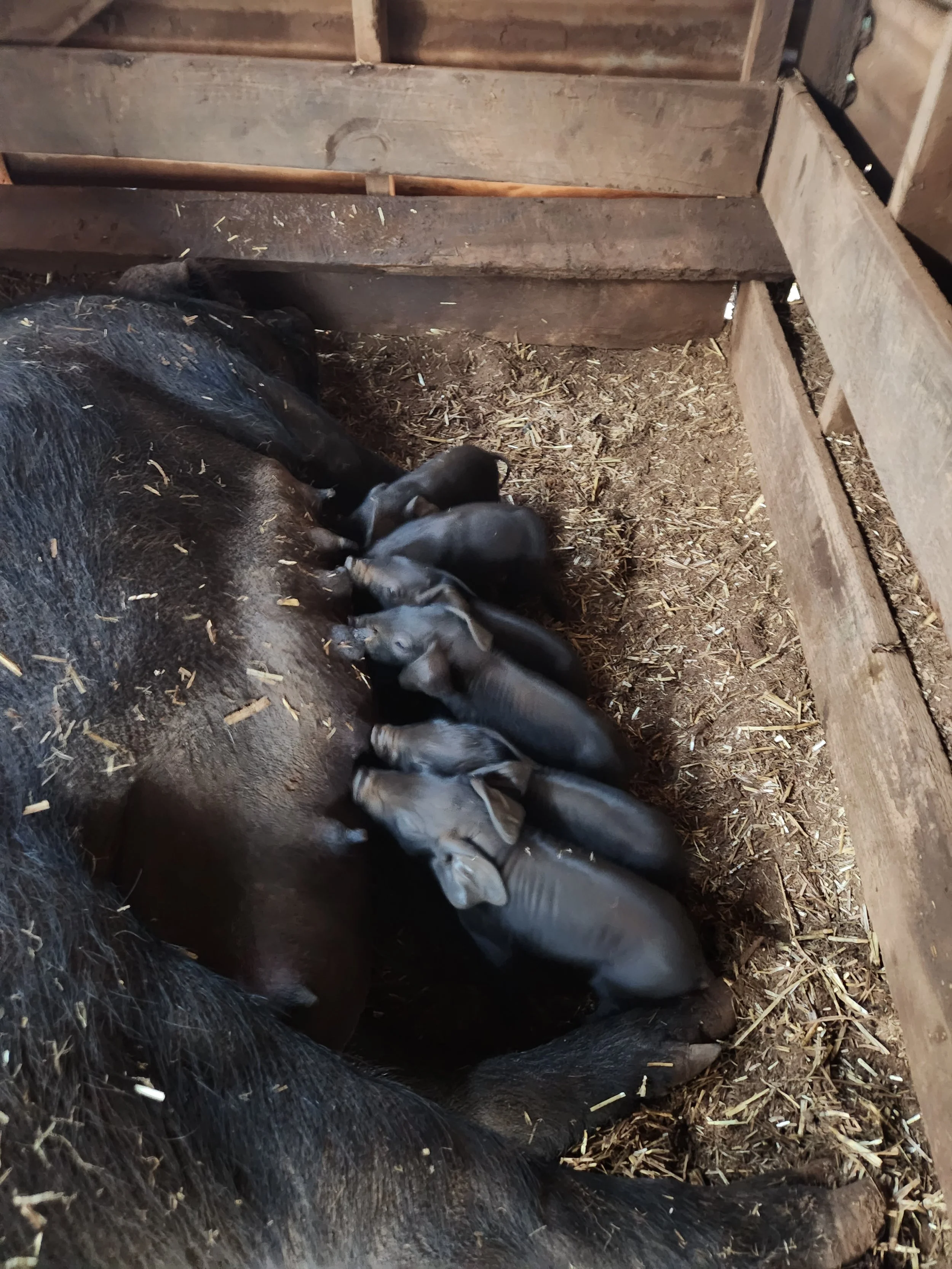
Their mothers, the sows, can be ready to mate again 3 days after weaning. We like to have enough flexibility in our system to give them a longer recovery period when needed, and cap farrowing to twice a year at most for each sow. Gestation for pigs is 114 days: this is 3 months, 3 weeks and 3 days before the next round of piglets are born. In the 24 hours before farrowing the sows will form a nest in their sheds using the straw we provide them and also bringing in extra grass, leaves and twigs. They arrange these in circles with raised edges to help keep the piglets sheltered and warm once they are born.
Our sows remain with us for around 5 years of life, producing around 10 litters on average during that time. Once they reach this age where their fertility slows beyond what we can support, they are processed for meat and sold via our CSA and market stalls. Older pig meat is richer, darker, and more gamey than the typical grower pigs, with excellent marbling. Like with many animals, these more mature pigs are highly prized by chefs and discerning meat eaters. Look out for this delectable mature meat in the coming months if you’re a regular customer, or if you’re not, sign up to our CSA to experience the superior culinary adventure of heritage breed, slow-grown, local, pasture raised pork.
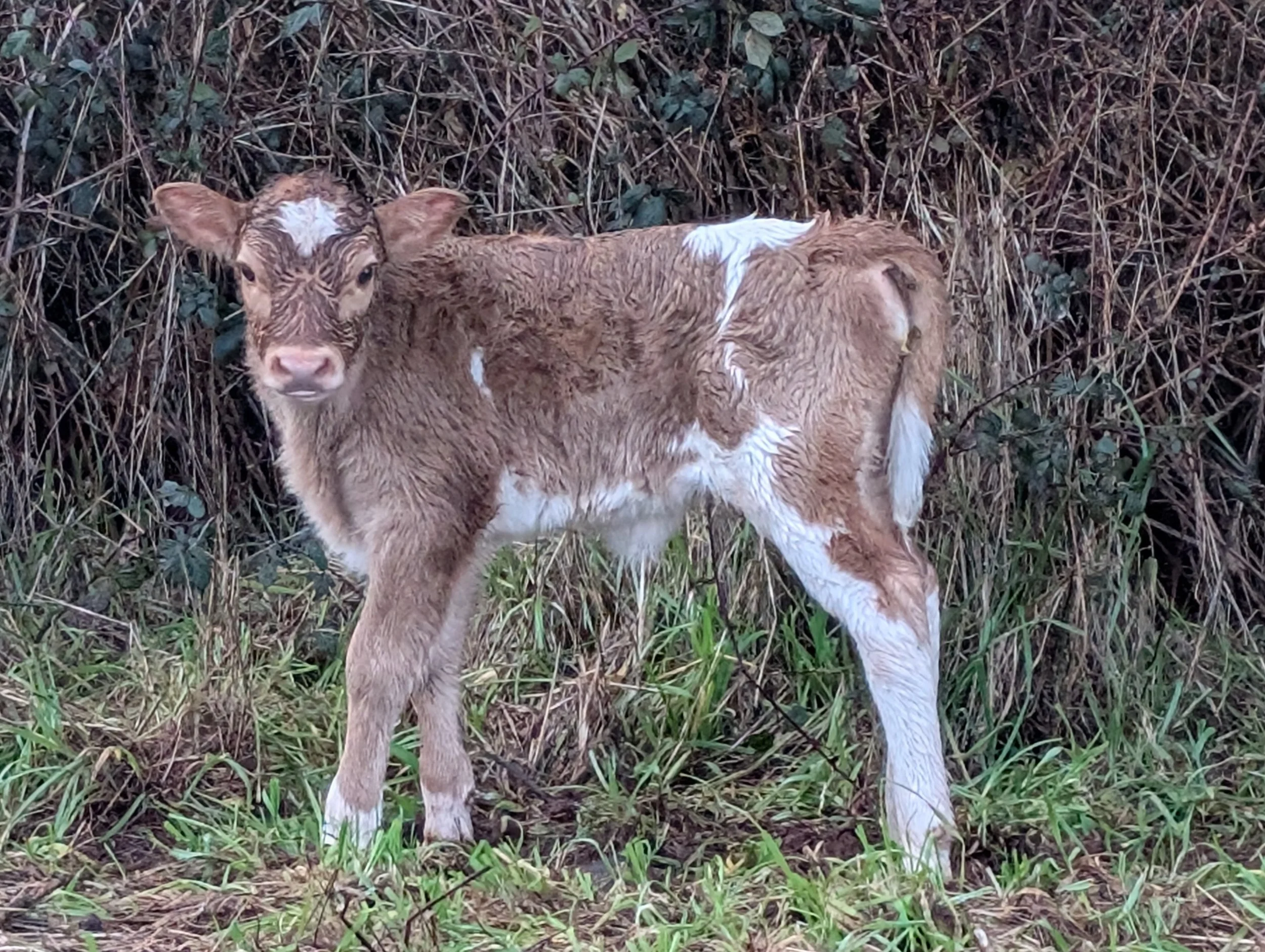
A bonus baby for the month: an unexpected bull calf